
6 Common Chimney Maintenance Tips
Nothing beats enjoying your fireplace on a cold winter night. It’ll keep you warm and looks stunningly beautiful. However, if you don’t follow a few chimney maintenance tips, it might not be safe to use your fireplace.
Maintaining your fireplace and chimney is crucial to keeping your home safe when using your fireplace. Without proper attention and cleaning, you’re susceptible to fires and water damage. Plus, you can save money on your energy bills.
These 8 chimney maintenance tips will help ensure that your fireplace and chimney are well taken care of and working properly. Don’t worry about anything because Vertical Chimney Care is here to help!
1. Have a Functioning Fireplace Damper
Your fireplace damper makes a huge difference in your home’s energy efficiency. When you’re not using your fireplace, the dampers should be closed to keep outside drafts from getting into your home through the chimney.
If your damper isn’t closing, it’s going to reflect on your energy bills. It’ll be much harder for your furnace or air conditioner to achieve your desired temperature because they’ll constantly be in battle with the drafts. They’ll end up using more power to heat or cool your home and the price of your electric and heating bills will skyrocket.
When you use your fireplace, the dampers need to be open. If your dampers are broken and can’t open, you can’t use your fireplace. The damper will trap the smoke in your home causing you to breathe in carbon monoxide which is very bad for your health.
Having your dampers fixed or replaced when they’re not working properly is crucial. When getting a replacement fireplace damper, make sure it fits properly – it must be snug and not have any gaps.
2. Make Sure your Chimney is Waterproof
Moisture and the elements can be major problems for your chimney. They can weaken the structural integrity of your chimney, cause mold and even damage the walls and floor around your fireplace. You’ll need to make sure your chimney waterproofing, chase cover, crown and flashing are all functioning properly.
Start by waterproofing your chimney. Adding a water sealant to the outside of your chimney will prevent moisture from breaking down the bricks and mortar and sneaking into you home.
Obviously there’s a large hole at the top of your chimney which allows smoke to escape. You don’t want to seal that hole but you also don’t want rain and snow from getting into your home. What can you do?
For prefabricated chimneys, chase covers are a great addition. It covers the top while still allowing smoke to escape through a small pipe. Most prefabricated chimneys come with galvanized steel chase covers which have a tendency to rust. Replace it with a stainless steel, copper or aluminum chase cover so you don’t have to worry about rust again.
For masonry chimneys, you’ll need to get a crown. It’s a concrete cover that prevents anything from getting into your home. Like chase covers, the smoke escapes through a pipe coming from the crown.
The flashing is where the chimney meets the roof. Without a sealant going around the meeting point, moisture can seep into your home. Make sure your flashing is in good condition.
3. Know When to Have Your Chimney Swept
No matter what type of fireplace you have, you’ll need your chimney swept in order to keep your home safe. The question is, how often do you need a chimney sweeping?
While there’s no specific amount of time to get your chimney cleaned, there are a few things to consider. The amount you use your fireplace will determine how often you have your chimney swept. Once the chimney liner has 1/8″ of soot, it needs to be cleaned.
If you’re not sure how to measure soot, there’s an easy metric you can use – your chimney should be cleaned every 50 burns. This differs from the type of fireplace you have. For instance, a gas log fireplace needs to be swept less often than a wood burning fireplace. About 50 burns is a good place to start.
4. Gas Log Fireplaces Are Better for Your Chimney Than Wood Burning Ones
This is one of the more unique chimney maintenance tips. Replacing a wood burning fireplace with a gas log fireplace could be safer for your home. Gas logs burn much greener than real logs – they produce a less harmful smoke and are extremely energy efficient. In fact, they have a 92%-99% efficiency rating vs the typical 60%-80%.
Not only is that safer for the efficiency, but it’s safe for you. Since the gas log fireplace is burning up to 99% of the gas used, there’s less soot in your chimney. That means you can go longer between chimney sweeps and you’re less at risk of fires.
Don’t think you’re sacrificing beauty for efficiency. For a time, gas log fireplaces lacked the elegance of a wood burning fireplace, but things have changed. Now, the hand painted, ceramic gas logs are made to look identical wood logs.
5. Make Sure Your Mortar Joints and Bricks Aren’t Crumbling
The bricks and mortar joints of your chimney play a crucial role in avoiding water damage inside of your home. However, they begin to crack and crumble over time and give moisture an entrance into your home.
Chimney tuckpointing is the act of repairing mortar. If you notice that your mortar is crumbling and the bricks are starting to become loose, then you’re in need of chimney tuckpointing.
Make sure you get a waterproofing sealant for your chimney stack. This will help keep the mortar and bricks protected from moisture.
6. Have Your Chimney Inspected Once Per Year
Just looking at your chimney isn’t enough to spot problems – some are underlying and need a professional to find them. Having a chimney inspection once per year is crucial to ensure your chimney’s safety.
There are three levels of chimney inspection to consider:
- Level 1: used for chimneys that seem to be functioning properly. Examines all readily accessible portions
- Level 2: best for homes that are changing how they use their chimney or the heating source. Required before selling a property. Includes everything in a level 1 plus attic, crawlspace and exterior inspections
- Level 3: most in depth inspection. Includes everything in inspection 1 and 2 plus checking more concealed areas. This inspection is for chimneys where there’s a major problem that needs to be addressed
These Chimney Maintenance Tips Will Save You Money and Keep Your Home Safe
There are many different chimney and home maintenance tips but these are our 6 favorites. They cover everything from minor chimney inspections to completely changing how you use your fireplace.
Top 12 Chimney Maintenance FAQ
by Full Service Chimney | Mar 17, 2021 | Chimney Maintenance, Fire Safety
If you own and operate any type of fireplace, you must practice frequent chimney maintenance. Like motor vehicles, both fireplace and appliance utility flues routinely need servicing over their lifespan. While we would all like to avoid the expense and hassle, maintenance on your chimney is inevitable and imperative. Failure to do so puts your system, home, and family at risk. This blog post will set you and your heating systems up for success by answering the most notable chimney maintenance frequently asked questions.
People often look for the cheapest and most convenient options available. Of course, that can sometimes work effectively with regular upkeep or minor repairs; however, sufficient knowledge and skills aren’t nearly as readily available when it comes to the inner workings of fireplace systems. That’s why you must choose Certified Professionals and we’re here to help.
Table of Contents
- How to Maintain Your Chimney Systems
- What is the Average Cost to Have a Chimney Swept?
- How Often Should I Clean My Chimney?
- Is it Okay to Leave a Gas Fireplace on All Night?
- Can Your Chimney Catch Fire?
How To Maintain Your Chimney Systems
The most essential way to maintain your chimneys is by having them inspected at least once per year. If you’ve recently purchased a new stainless steel liner system, then it likely comes with a warranty. Depending on the manufacturer, a chimney liner warranty could be 10-20 years.
At Full Service, our stainless steel liner systems are under a lifetime warranty with professional installation. An annual inspection is a requirement to fulfill the liner warranty claims if needed.
How Often Does Your Fireplace Need Maintenance
A fireplace and its chimney flue need swept and inspected at least once per year. Please keep in mind that this is only the minimum recommendation for the proper upkeep of your burning system, no matter what type of fuel you use (gas or wood). It’s also true for any gas appliance that has a flue pipe which also requires regular maintenance for performance and safety.
Other systems that need annual cleaning are gas furnaces or water heaters, and wood stoves. The same is true for oil burners, but we don’t see too many of those in our Midwestern area!
How Can I Tell if My Chimney Needs Cleaning?
Suppose your fireplace is experiencing poor fire performance, animal entry, a strong campfire smell, or oil spots on the walls. In that case, it’s a definitive sign that you need to schedule a professional inspection and cleaning. Failure to act on these warning signs can lead to dangerous situations in your home, such as fires and carbon monoxide entry.
You must be able to identify these warning signs successfully. So let’s take a closer look at each sign:
- Poor Fire Performance- If your fires aren’t burning as efficiently, or starting one is a struggle, the fire isn’t receiving adequate oxygen levels. Your flue could be clogged, or a specific part isn’t functioning correctly.
- Animal Entry- Do you hear animal noises coming from your flue area? Do you see nesting on the top? If yes, you need to hire a professional to remove it. Animals and their nests can prevent proper airflow and even cause fires.
- Odors- Campfires are a comforting smell only when they’re not near your fireplace! This is a tell-tale sign that dangerous creosote is building up within your system.
- Oil Spots- Oil spots on your walls isn’t just visually unattractive, it’s a clear sign that creosote is present.
What is the Average Cost to Have a Chimney Swept?
The average cost of an annual chimney cleaning is $200 to $350. Some companies are more expensive than others, but the prices vary primarily due to the type of system being serviced.
If your systems showing signs of malfunction or damage your local certified sweep may suggest that you get it fixed or replaced. To promote transparency during inspections, our technicians take photos and videos to ensure you understand what’s going on within your flue where the bulk of issues are hidden from the view of hearth and home owners.
How Do You Sweep a Chimney?
The process of sweeping a chimney goes in these general steps:
- A full inspection of the system.
- Place a drop cloth around the cleaning area.
- Put on all protective equipment.
- Take out any hindering objects from the fireplace.
- Start sweeping the flue with the appropriate tools while the HEPA vacuum is simultaneously on.
- Finally, brush and vacuum around the firebox area.
WARNING: Please keep in mind that this is a VERY brief overview of the process. There is far more to sweeping than just merely cleaning out your flue. Performing these steps is much more complicated and requires extensive knowledge of chimney types, fireplace types, professional equipment, and sweeping practices.
Can I Clean My Flue from the Bottom?
Yes, in most cases, you can absolutely have your chimney cleaned from the bottom. Sweeping from the top can be dangerous and a lot of work. You’ll be required to safely climb a ladder, walk across the roof, disassemble the cap, and clean the flue using the correct methods and equipment.
Sweeping from the below is just as detailed in terms of technical knowledge. Still, it’s much easier if you don’t feel comfortable on a roof.
As we said before, you need to schedule an inspection before doing chimney maintenance and repair work. But if you insist on sweeping your fireplace, we recommend that you clean from the bottom.
Can I Clean My Chimney Myself?
Yes, if you’re a competent DIYer, you technically could clean your flue yourself. But even if you’re a DIY expert in all things, you should still hire a professional to conduct an annual inspection and cleaning.
While DIY typically implies that you’ll save on price, professional sweeps utilize various industry tools and specialty equipment during their cleanings.
There are also serious safety concerns involved. While cleaning, exposure to creosote and other dangerous carcinogens is constant. In some cases, sweeping from the roof is the only option. That’s dangerous and scary for people of all ages!
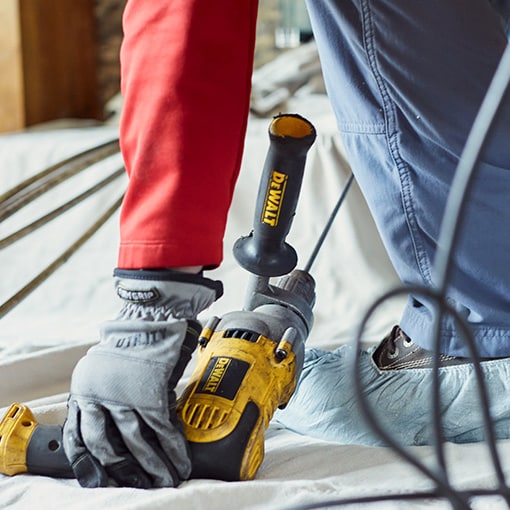
A few of the tools and equipment needed for proper cleaning
For more detailed information on the considerations involved with cleaning and chimney maintenance tips, check out this blog post.
How Often Should I Clean My Chimney?
Your chimney should be cleaned and inspected at least once a year according to the Chimney Safety Institute of America (CSIA) and other veteran professionals. It should also always be swept when any amount of glazed creosote is present.
Experts worldwide have told customers that exact statement a thousand times. And we’ll continue to say it because it’s an essential aspect of wood-burning and gas fireplace chimney maintenance. As a fireplace owner, you should follow this maintenance tip religiously.
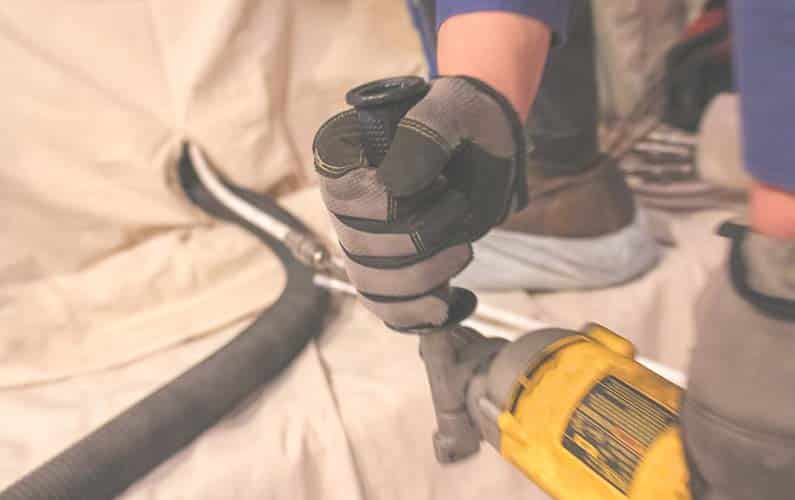
Certified Sweep cleaning from the bottom
If you use a wood-burning fireplace year-round, your system may need cleaned 2 to 3 times per year. Of course, the more fires started, the more creosote that will be built-up. Spending a couple hundred dollars on inspections and cleaning is better than worrying about putting your family and home at risk.
Do Cleaning Logs Really Work?
While the CSIA gave their accepted product status to chimney cleaning logs, they don’t really work as an effective cleaner. It may sound great, but $15 cleaning logs are not, and never will be, a substitute for hiring a professional sweep.
Cleaning logs won’t properly clean your system, but that doesn’t mean they’re useless. As you can read more in our creosote sweeping blog, they can play a vital role in the chimney maintenance process. To minimize creosote follow these maintenance tips:
- Burn wood with 15 to 25 percent moisture content
- Follow manufacturer and technician instructions.
- Utilize cleaning logs every few dozen fires.
SUGGESTED READING: We have an entire post dedicated to this if you’re interested to learn more.
Is it Okay to Leave a Gas Fireplace on All Night?
You should never leave a gas fireplace on all night. We understand that your fireplace provides warmth and comfort throughout the house, but it can quickly turn hazardous overnight.
Natural gas, propane, and wood-burning fireplaces produce a poisonous gas called carbon monoxide, commonly known as the silent killer. It’s a fatal gas that’s odorless, colorless, and can fill up a room in a hurry.
To ensure carbon monoxide safety, you need to educate yourself on direct vent, ventless, and insert run-time specifications. Those run-times vary mainly depending on the manufacturer’s instructions and local authorities having jurisdiction. But no matter what, never leave a fire running in an unattended room.

Gas Fireplace
You can become an expert on all things fireplaces, yet, accidents can still happen. Leaving your gas fireplace on overnight is a possible one. That’s why you need at least one smoke and carbon monoxide detector in a room where a fireplace is present.
What Causes a Furnace to Leak Carbon Monoxide?
If carbon monoxide is leaking through your furnace, that likely means that your heat exchanger is cracked.
A heat exchanger is a metal shield that distributes air from the furnace. When the furnace heats up, the metal shield expands. When the furnace cools down, the metal shield contracts. As this keeps happening over time, cracks can develop within the shield, causing carbon monoxide to leak out.
You can avoid potential furnace carbon monoxide leaks by scheduling annual inspections, replacing air filters, and checking your carbon monoxide detectors.FURNACE SERVICE
Can Your Chimney Catch Fire?
Chimneys can catch fire, and, unfortunately, they are far too familiar. Over 25,000 chimney fires happen per year. Many of which led to hundreds of thousands of dollars in damage to your home. Not only can they destroy your system, but they can also ruin your home. They truly epitomize why you should take chimney maintenance seriously.
These fires typically occur due to an abundance of creosote build-up or debris catching fire inside the flue. Restricted air, improperly seasoned firewood, and cool temperatures in the system encourage creosote build-up.
Other than chimney fires obviously being extremely destructive, a significant issue is that most of them go undetected. Check out this blog post to learn more about chimney fire warning signs.

Aftermath of a chimney flue fire
Summary
Hopefully, for those who made it through this blog, you now understand the severity of proper chimney maintenance. If you put off an oil change for too long, your engine will eventually run less efficiently, wear out, and possibly, break down. The same is true for maintaining your chimney. Putting off or finding quick-fixes for professional inspections and cleanings is extremely risky.
To summarize, if you frequently use your fireplace, wood-stove, or any other system, proper maintenance is key. And if you aren’t an expert technician, hire a certified professional to help maintain it. If you aren’t sure or confident about something, hire a professional. If you even lightly suspect an issue is occurring within your system, hire a professional. We promise that it’s not worth the risk!
Leave a Reply